
Table of Contents
By Steve
The Kayak Roll: Your First Step to River Confidence
Now that you know the basics, the kayak roll is your next milestone. Mastering rolling a kayak is the most important self-rescue skill for whitewater paddling. A solid roll builds river confidence because you know you can recover from any capsize.
The roll uses a hip snap and torso rotation, and it's best learned in calm, flat water first. Part of any whitewater kayak training for beginners includes dedicated roll practice before moving to current. Our instructors help you develop this technique step by step; it requires patience and proper guidance, not an instant trick.
At our basecamp in Cocorná, we offer coaching for all levels, from beginners to advanced. For structured practice with expert coaching, explore our kayaking skills clinics for beginners. With over 30 years of experience and instruction by the experts, we'll help you build a reliable roll, the prerequisite for safely tackling faster currents and more technical rapids. Once your roll is solid, you'll be ready to start learning river reading techniques.
Essential Preparation for a Successful Roll
Learning to roll a kayak starts long before you capsize. A spray skirt that fits snugly keeps water out of your cockpit, while a straight-shaft paddle gives you precise control through the sweep. We always have you check your PFD and helmet for a secure fit—every piece of gear matters. Adding a nose plug and practicing in a calm, controlled spot like a pool or a slow-moving eddy is what we recommend first.
Body positioning is just as critical. Tuck forward, drop your head, and set the paddle blade parallel to the boat. The roll is a smooth combination of a hip snap and a paddle sweep, not a frantic effort. For guided instruction, consider booking kayak instructor training in Colombia through our skills clinics—this is an ideal whitewater kayak training for beginners experience. With over 30 years of combined guiding experience, our instructors at Freak’n Creek’n break down every motion step by step. Our favorite practice river, the Rio Calderas, offers gentle currents perfect for guided roll sessions.
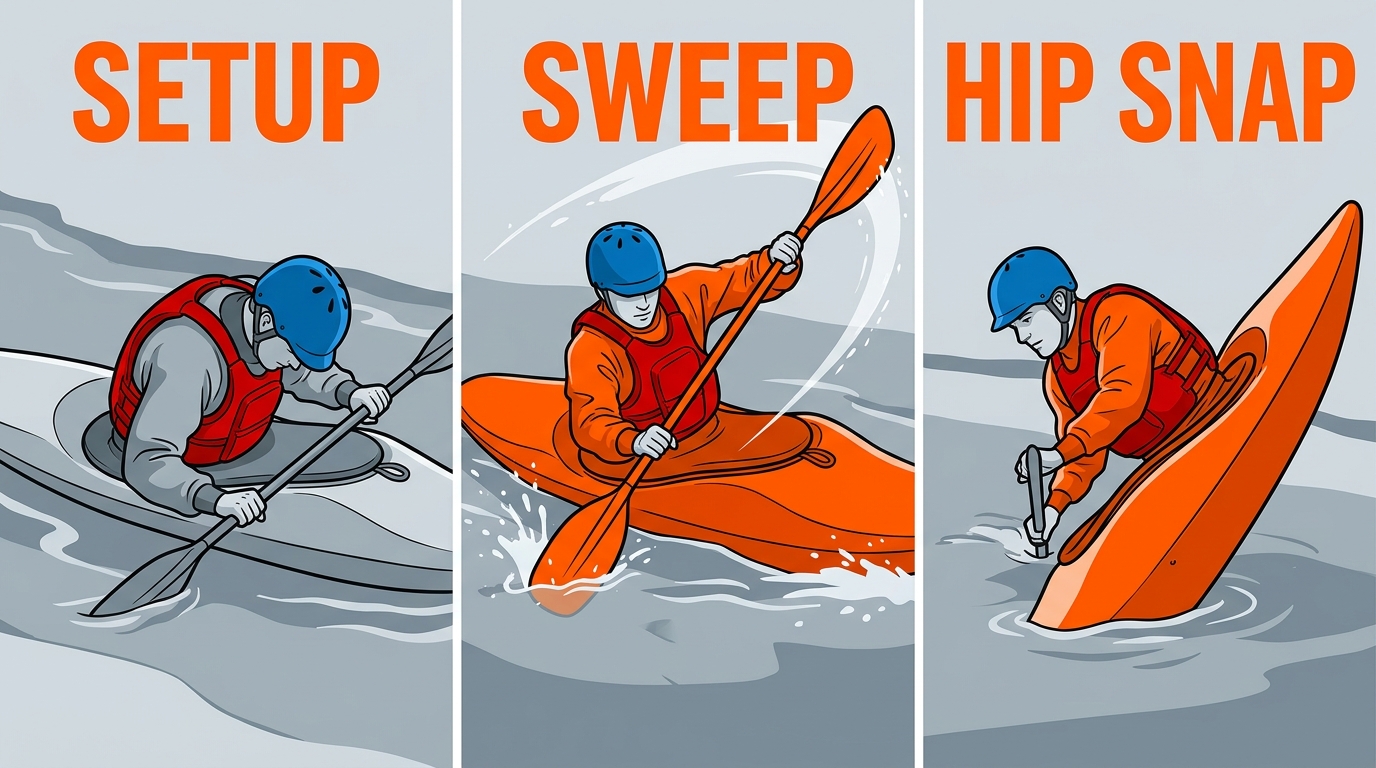
Step-by-step sweep roll kayak instruction
Essential kayak roll preparation checklist
Stay relaxed underwater—breathe steadily and let your body move with the motion. Remember, the roll is a repeatable skill, not a struggle. Keep a nose plug handy to avoid water up your nose and reduce panic. With these preparations in place, you’re ready to dive into the roll technique we explore next.
Setting Up Your Grip and Upper Body Position
Mastering rolling a kayak begins with your grip and upper body alignment. Place your hands shoulder-width apart on the paddle shaft, with your control hand centered over the blade. Keep your elbows slightly bent and close to your torso, and maintain a neutral wrist position to avoid strain.
Lean your upper body forward over the deck, not backward, to stay balanced. Align your shoulders parallel to the water and keep them relaxed. According to American Whitewater, this posture engages your core and protects your shoulders. Before initiating the roll, ensure your paddle blade is perpendicular to the surface.
We recommend practicing this setup on dry land first. As part of your whitewater kayak training for beginners, master the grip before moving to river reading techniques. Remember, rolling a kayak relies on muscle memory from consistent practice. Always wear your PFD and train in calm water. Once you are confident, apply this on our Rio Calderas rafting trip for real-world experience.
Mastering the Hip Snap
The key to a reliable roll lies in one fundamental motion: the hip snap. When learning rolling a kayak, we focus on a sharp, lateral rotation of the hips toward the water’s surface. The hips lead the movement — not the shoulders or arms — while the paddle stays flat as a low brace. Keep your head down and let it surface last; lifting the head early sinks the boat and kills the roll. To build muscle memory, practice hip snaps on land or in shallow water, tilting the boat and isolating the motion before adding the full sequence. For anyone starting whitewater kayak training for beginners, this move is the milestone that makes everything click. Once it feels automatic, try combining your hip snap with river reading techniques to time your brace perfectly in moving current. Our certified instructors at Freak’n Creek’n have guided thousands through this progression — join us in Cocorná and let’s get your roll solid.
Learning the Sweep Roll
When you start rolling a kayak, the sweep roll is the most reliable and recommended technique for beginners. While there are advanced rolling methods, our guides at Freak'n Creek'n prioritize this foundational skill in every whitewater kayak training for beginners clinic because it offers a simple, effective path to recovery.
The sweep roll breaks down into three distinct phases. First, the Setup: you lean forward, tucking your body close to the deck with the paddle blade angled toward the bow. Next, the Sweep: you sweep the paddle out to the side in a wide, controlled arc across the water's surface. Finally, the explosive Hip Snap: you drive your hip and knee upward to forcefully right the kayak, bringing your head up last. Mastering this kayak roll takes patience. We always recommend practicing in calm, flat water at our basecamp in Cocorná, ideally with a partner or spotter nearby. In our structured skills clinics, with over 30 years of combined guide experience, you receive step-by-step instruction on this rolling technique in a safe, supportive environment, building the confidence you need to progress.
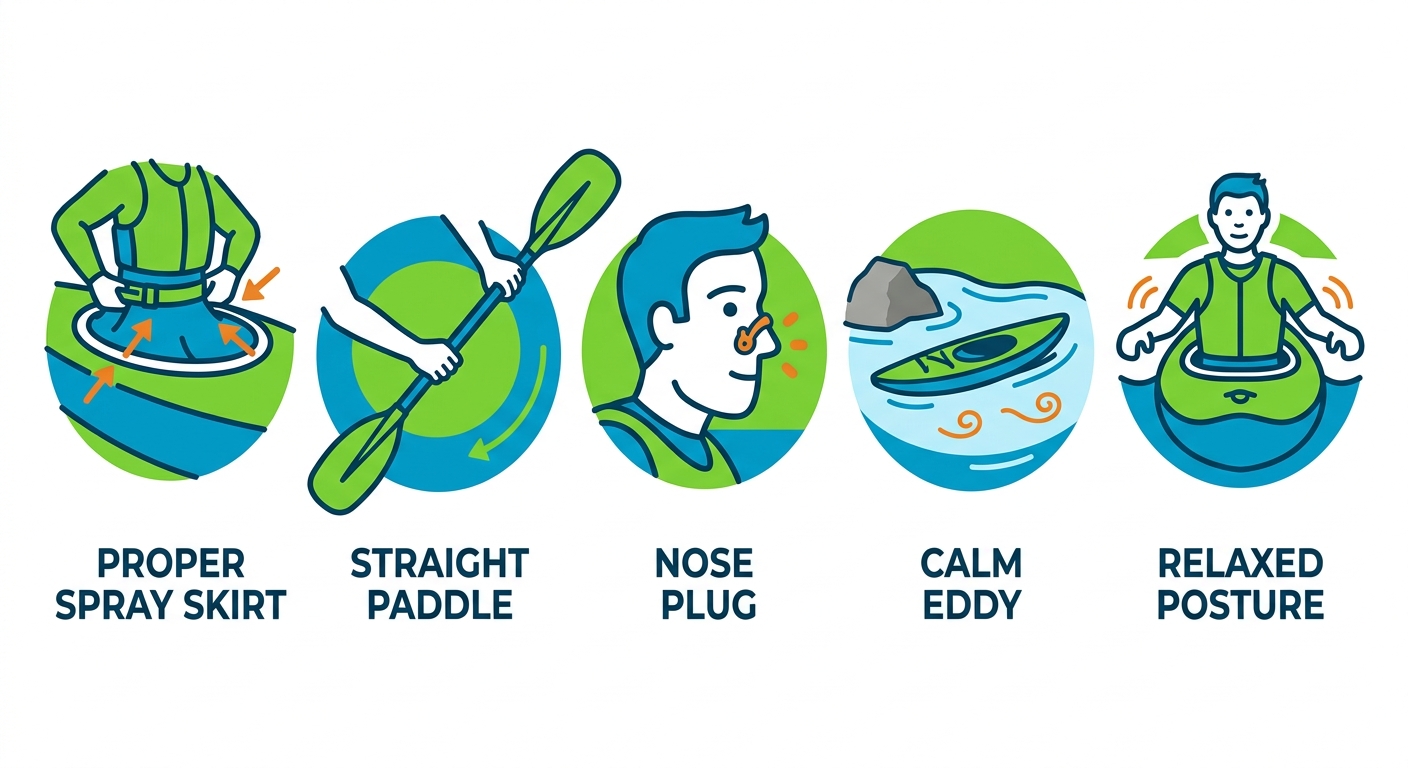
Essential kayak roll preparation checklist
Step-by-step sweep roll kayak instruction
Progressing to the C-to-C Roll
When rolling a kayak, the C-to-C roll is the natural progression after the sweep roll. Once you’ve mastered beginner whitewater kayak training, this advanced technique relies on a powerful hip snap and close paddle position — not a wide paddle sweep. The C-to-C keeps the blade vertical and near the boat for a fast, efficient recovery.
To practice, start in calm flat water with a spotter. Keep your head down until the hip snap drives your torso up; engage your core and tuck forward. At Freak’n Creek’n, our instructor training program, by the experts, emphasizes that core-driven motion is the key to consistency.
- Warm up with supported hip-snap drills.
- Progress to unassisted attempts in still water.
- Always wear a helmet and practice with a buddy.
- Learn basic river reading techniques before moving to current, and always follow American Whitewater river protection guidelines.
Mastering the C-to-C roll lets you explore yourself with nature, creating great adventure, food, fun, and memories on the river.
Adding the Extended Paddle Roll
Building on the standard roll you just practiced, the extended paddle roll is a vital advanced variation for any serious kayaker. When rolling a kayak in a tight spot, like being pushed against a rock or operating in extremely shallow water, a full paddle sweep may not be possible. This technique solves that by gripping the paddle near the end of one blade, creating a much longer lever arm to force the boat upright with a powerful, sweeping arc.
Mechanically, you place your control hand at the very end of the shaft while the other slides further down. Combined with a precise, explosive hip snap, this extended reach generates the necessary lift for a successful kayak roll technique even when you lack room for a classic setup. Learning how to roll a kayak with an extended grip is demanding, however, as it requires more upper-body strength and timing than a standard recovery. Our guides on the Río Calderas in Cocorná use this move regularly to navigate the river's technical, granite-lined channels, making it a perfect real-world skill for that expedition.
As with any advanced skill, we recommend building competence in a calm pool before relying on it in current. Taking a whitewater kayak training for beginners course that progresses into advanced maneuvers is one of the best ways to learn with proper feedback and safety support. Developing this roll will boost your confidence on technical runs and opens the door to truly engaging with the river, and with a foundation in river reading techniques, you can identify when this roll is your best option.
In the following section, we will cover drills to build your confidence with both the standard and extended paddle roll.
Practicing Your Roll in Moving Water
Rolling a kayak in moving water introduces a level of complexity that flatwater practice simply cannot replicate. At Freak’n Creek’n, we believe that once you are comfortable with your flatwater roll, it is time to Explore yourself with nature in a gentle current. We recommend starting in a calm eddy, where our guides can watch you carefully while you begin your whitewater kayak training for beginners progression.
- Find a spotter: Always have a safety kayaker nearby who can assist if needed.
- Focus on your hips: Torso rotation and a powerful hip snap do the work; relying on your arms leads to failure.
- Read the river: Use basic river reading techniques to understand how the flow will push on your paddle blade and body.
- Practice both sides: Building a reliable off-side roll creates balanced confidence in dynamic water.
According to American Whitewater safety guidelines, which serve as an industry-standard resource, a spotter and a conservative, step-by-step approach are critical. We never rush this process on our trips, ensuring you build the muscle memory needed to stay calm and perform under pressure. By mastering these techniques in controlled conditions, you naturally reduce the common problems we address in our next section. That is how we create Great adventure, food, fun and memories, one confident roll at a time.
Refining Your Roll for Consistency
Learning the mechanics of rolling a kayak is a major milestone, but the real goal is building a reliable, automatic response you can count on in moving water. After three decades of teaching rolls on Colombian rivers, we have seen that consistency comes from refining your hip snap and torso rotation — not muscling through with your arms.
The most common mistakes we see are leading with the head, prying the paddle downward, and rushing the setup before you are fully tucked. These habits make a roll feel unstable even when it works. To break them, practice structured drills:
- T-rescues and sculling for support to isolate the hip snap
- Eyes-closed rolling in the pool to build muscle memory
- Video review and instructor feedback to catch small form errors
Each session adds reliability, and a consistent roll builds real confidence when reading current. When you rarely swim, you can focus on river reading techniques and setting up for rapids instead of worrying about flipping. Our kayak clinics in Cocorná take this same progression and apply it directly on the Antioquia runs — nothing replaces hands-on refinement with guided feedback. That foundation in whitewater kayak training for beginners is exactly what turns a practiced roll into a dependable one.
Overcoming Common Rolling Challenges
Now let's tackle the most frequent struggles you'll face when rolling a kayak in whitewater. Many paddlers find the kayak roll to be initially frustrating, but understanding why it fails is the first step to a reliable rolling recovery. The three most common culprits are: lifting your head too early, which collapses your body from the deck; an incomplete sweep stroke that finishes short of the stern; and poor hip engagement that prevents the boat from snapping upright. Recognizing which of these errors is tripping you up will accelerate your progress significantly.
The correct rolling sequence follows a deliberate order: set your paddle flat against the surface, execute a fast and complete sweep, drive your hips aggressively to initiate the boat's rotation, and finally let your head follow last. Your head should be the final thing to leave the water. We've seen in our whitewater kayak training for beginners clinics that paddlers who master this hip-first, head-last discipline consistently unlock their roll faster than those who muscle through it.
Targeted practice on flatwater is your best friend here. Begin with dry-land drills to build muscle memory, then move to shallow, calm water where you can gradually introduce river reading techniques—understanding how current direction and eddies affect your setup is essential for choosing the right moment and position to roll in moving current. With each deliberate session, the motion becomes more instinctive.
Our team has refined these rolling progression methods over three decades, and our guides draw on the same systematic approach we use in technical rope rescue training—breaking complex maneuvers into repeatable steps ensures safety and consistency under pressure. This rescue-trained mindset helps you stay calm when a roll attempt fails because you know a structured recovery is always available.
Learning to roll is not a talent; it's a skill built through repetition. Every missed roll teaches you something, so stay patient with yourself. Once you overcome these common challenges, you'll be ready to take on more advanced river-running scenarios with confidence and control.
From Practice Pool to River Adventure
Once you've mastered rolling a kayak in our controlled pool at Freak'n Creek'n in Cocorná, the next milestone is taking that skill into moving water. We've all been there — nervous but excited, ready to see if the practice pays off.
With over 30 years of guiding experience, we've designed our whitewater kayak training for beginners as a structured path from flatwater confidence to real river dynamics. The progression follows a natural rhythm: first mastering a reliable pool roll, then practicing in gentle current, and finally testing your technique on Class I and II rapids with an instructor at your side. Every step includes thorough safety checks — we outfit you with certified gear and brief you on scout-your-rapid protocols before you launch.
As you adapt to the river's push and pull, our guides introduce river reading fundamentals — spotting eddies, reading current seams, and choosing your line. It's the difference between surviving a rapid and flowing with it. And when you're ready, completing our skill clinics opens the door to guided river trips where you can truly settle into the adventure. In the next section, we'll walk you through what it feels like to run your first rapid.