
Table of Contents
- Regenerative Travel in Colombia
- Understanding Regenerative Travel Principles
- Biodiversity and Regional Leadership in Regenerative Tourism
- Choosing Sustainable River Expeditions and Eco-Adventures
- Community Integration and Conservation Festivals
- Frequently Asked Questions About Regenerative Travel in Colombia
- Your Path to Regenerative Travel in Colombia
Regenerative Travel in Colombia
Regenerative travel in Colombia goes beyond sustainability by actively restoring ecosystems and strengthening communities and cultures. Unlike traditional models that aim to ‘do no harm,’ regenerative travel in Colombia ensures destinations are left measurably healthier for future generations.
At Freak’n Creek’n, we have embedded these principles into over 30 years of eco-adventure guiding. Our operations support river clean-ups, hire local community guides, and source fresh ingredients from neighboring farms to reduce single-use plastics and keep economic benefits within Antioquia. This approach lets guests revive themselves in nature while contributing to positive, on-the-ground impact.
As the Colombia adventure tourism market evolves toward 2026, regenerative principles are gaining traction. Our basecamp in Cocorná models this philosophy with cabins built from local materials, a farm-to-table restaurant, and a Spanish school employing local teachers. Upcoming multi-day nature adventure tours for the 2026 season, such as the Río Verde 2-day expedition, blend rafting through pristine canyons with education on habitat restoration and Leave No Trace practices.
For travelers seeking a deeply personalized experience, our custom adventure itineraries in Colombia let you choose activities that directly support local conservation and community well-being. By joining us, you experience great adventure, food, fun and memories while helping restore Colombia’s breathtaking river ecosystems.
Understanding Regenerative Travel Principles
Let’s explore the core principles that make regenerative travel in Colombia a transformative approach, one where our journeys actively restore ecosystems and communities, leaving rivers cleaner and local families stronger than before we arrived. This is an invitation to explore yourself with nature while traveling in a way that gives back.
The table below highlights how regenerative travel goes beyond sustainability. Sustainable travel asks us to minimize our footprint, but regenerative travel invites us to become restoration partners. This is a shift our three decades of Colombian river expeditions confirm travelers increasingly seek.
| Aspect | Sustainable Travel | Regenerative Travel |
|---|---|---|
| Primary Goal | Minimize harm | Leave places better than found |
| Environmental Impact | Reduce footprint | Restore and enhance ecosystems |
| Traveler Role | Responsible consumer | Active participant in restoration |
| Long-term Vision | Maintain status quo | Improve ecological and social systems |
These four dimensions reveal why regenerative travel resonates so strongly with Colombia’s adventure tourism landscape. Where sustainability maintains, regeneration improves.
Regenerative travel embraces three interconnected principles: restoration, active participation, and a long-term vision for systemic improvement. Unlike tourism that measures success by minimized damage, regenerative travel measures success by ecological and social gains. The OECD has consistently highlighted how nature-based tourism creates economic value while requiring robust environmental stewardship. This finding drives Colombia adventure tourism market 2026 momentum toward regenerative models.
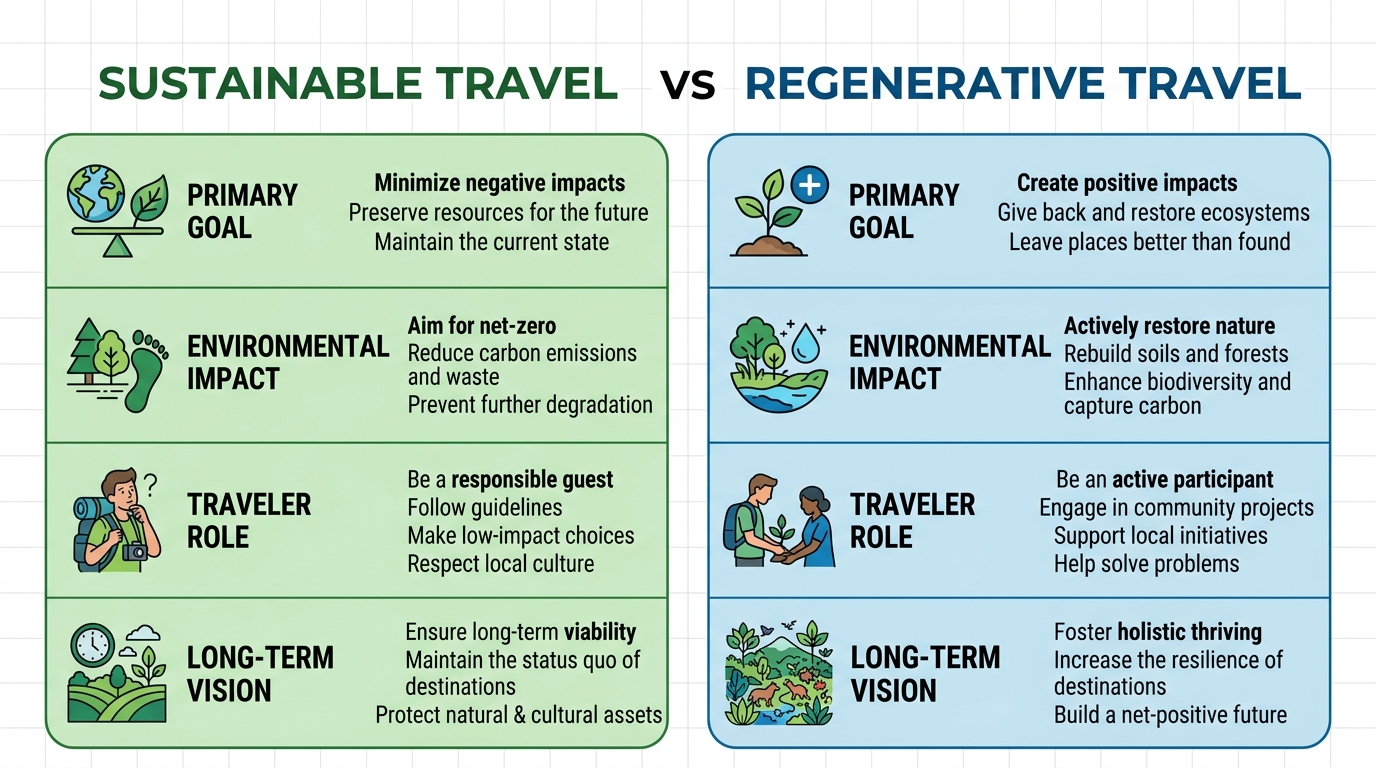 Comparison of sustainable versus regenerative travel principles
These contrasting approaches come alive in Colombia’s river corridors and mountain communities. For us at Freak’n Creek’n, regenerative principles are not abstract ideas. They are the foundation of every trip we run, built by the experts with over 30 years of experience from our basecamp in Cocorná, Antioquia. Our team has seen firsthand how responsible tourism transforms landscapes and livelihoods.
Activities like whitewater kayaking in Colombia let travelers engage directly with river ecosystems while supporting conservation. When you join our sustainable river expeditions, you become part of a cycle of care. We hire local guides, source from neighboring farms, and design our custom rafts to minimize riverbed erosion. Community-led tourism in Güejar, Meta shows how Colombian enterprises increasingly prioritize ecosystem health over short-term gains.
Regenerative travel invites you to revive yourself in nature while giving back to the places that sustain us. As the experts who have spent decades navigating Colombia’s rivers, we believe the most meaningful adventures blend great adventure, food, fun and memories with genuine stewardship. Now that we grasp the principles, the next section shows how to apply them on your Colombian adventure.
Biodiversity and Regional Leadership in Regenerative Tourism
Regenerative travel’s impact is especially tangible in Colombia, where tourism has evolved beyond simply minimizing harm to actively restoring the ecosystems and communities it touches. Unlike conventional tourism models that may deplete natural resources, regenerative travel in Colombia focuses on leaving a place better than it was found. Eco tourism in Colombia laid the groundwork, but regenerative practices now elevate that mission by weaving conservation directly into the fabric of the traveler’s experience. We at Freak’n Creek’n have seen firsthand how this approach can generate meaningful, positive change, from reforested riverbanks to thriving community-led initiatives.
How Regenerative Travel Supports Biodiversity in Colombia
Colombia’s status as one of the most biodiverse countries on Earth makes it a critical stage for regenerative travel. This model actively contributes to biodiversity by funding and implementing tangible conservation projects. For example, in Antioquia’s Río Verde basin, reforestation initiatives are stabilizing riverbanks, improving water quality, and expanding habitats for native wildlife. Similarly, efforts to restore the health of the Río Melcocho involve community-led clean-ups and sustainable land management practices that protect this vital watershed. In the lush Cocorná rainforest, wildlife habitat restoration is creating biological corridors that allow species to flourish. These projects demonstrate how a visit to Colombia can translate directly into a healthier planet, making every sustainable river expedition an act of preservation.
Leading Regions for Regenerative Tourism
Several Colombian regions are emerging as pioneers in this transformative approach to travel. The table below spotlights four Colombian regions that exemplify regenerative travel, detailing their key initiatives, irreplaceable biodiversity hotspots, and methods of community engagement.
| Region | Key Initiatives | Biodiversity Hotspots | Community Engagement |
|---|---|---|---|
| Antioquia | River conservation, eco-adventure basecamps | Río Verde, Río Melcocho, Cocorná rainforest | Local guide cooperatives, Samana Fest |
| Huila | Birdwatching circuits, agro-tourism | Desierto de la Tatacoa, cloud forests | Community homestays, coffee trails |
| Chocó | Mangrove restoration, whale watching | Utría National Park, Pacific coast | Afro-Colombian community tourism |
| Cartagena / Bolívar | Urban sustainability, mangroves | Corales del Rosario archipelago | Volunteer reef cleaning, local artisan markets |
Antioquia stands out for its river conservation initiatives and eco-adventure basecamps, which blend adrenaline with ecological stewardship. Our basecamp serves as a hub for these activities, directly supporting local guide cooperatives and events like Samana Fest that celebrate river culture. Huila has carved a niche with its world-class birdwatching circuits and agro-tourism experiences, where visitors can stay in community homestays and walk through coffee trails that fund regional conservation. On the Pacific coast, Chocó is leading in mangrove restoration, with whale-watching seasons in Utría National Park that directly finance Afro-Colombian community tourism projects. Finally, in Cartagena and Bolívar, urban sustainability efforts and volunteer reef cleaning programs in the Corales del Rosario archipelago engage both travelers and locals in protecting delicate marine ecosystems.
Colombia’s 2026 Strategy and Adventure Tourism Market Outlook
Colombia’s ambitious 2026 national tourism strategy sets a clear course toward sustainability, creating a supportive framework for the regenerative models already thriving in its regions. This national push aligns with encouraging trends in the colombia adventure tourism market 2026. According to our internal market analysis, the sector is poised for significant growth, with multi-day nature adventure tours showing strong projected compound annual growth rates. Investment trends point toward increased demand for authentic, low-impact experiences that offer deep immersion in nature and culture, a trend that is expected to continue towards 2034. This favorable outlook reinforces the value of the pioneering work being done in regions like Antioquia, where the infrastructure for world-class, responsible adventure is already in place. As Colombia consolidates its position as a global leader in regenerative travel, we remain committed to offering expeditions that deliver great adventure, food, fun, and lasting, positive impact.
Choosing Sustainable River Expeditions and Eco-Adventures
Choosing a river expedition isn’t just about seeking thrills on cascading whitewater — it’s a conscious decision that shapes the environments and communities you visit. When you choose a river expedition that prioritizes the planet, you’re practicing sustainable travel in South America. Here at Freak’n Creek’n, we’ve spent over 30 years crafting adventures that embody regenerative travel Colombia, an approach that goes beyond simply leaving no trace to actively improving the rivers we love. By selecting operators who invest in equipment, waste reduction, community partnerships, and guide training, you transform your vacation into a force for good. This guide will help you identify what truly makes an expedition eco-friendly and where to find the most authentic experiences.
What Makes a River Expedition Truly Sustainable
A truly sustainable river expedition is defined by measurable commitments across four key areas: equipment, waste, community, and safety training. These standards separate operators who market a green image from those who deliver real environmental and social returns. Our criteria are drawn from decades of hands-on experience running trips throughout Colombia and align with internationally recognized eco-tourism frameworks.
| Feature | Traditional Expedition | Sustainable Expedition |
|---|---|---|
| Equipment sourcing | Off-the-shelf, standard life jackets | USCG-approved jackets, custom rafts imported for steep creeks |
| Waste management | Single-use plastics, no waste plan | Zero-waste protocols, bring back all trash |
| Local community involvement | Minimal engagement outside guides | Joint ventures with community cooperatives, local food sourcing |
| Guide training | Basic first aid | Swiftwater Rescue and Wilderness First Aid certification |
The difference is stark, but it’s important to understand that this level of commitment has real-world implications. Sustainable equipment costs more upfront, yet it’s designed for longevity and performance under extreme conditions. Imported kayaks from brands like Liquid Logic and Pyranha, combined with USCG-approved life jackets, ensure every guest is protected while reducing the need for frequent replacements that end up in landfills. Our whitewater kayaking Colombia guides model these exact protocols, and our nature immersion retreats Antioquia integrate these practices seamlessly into every journey. Ultimately, you’re choosing an eco-conscious expedition that leaves the river healthier than you found it — funding clean-ups, monitoring water quality, and supporting local livelihoods.
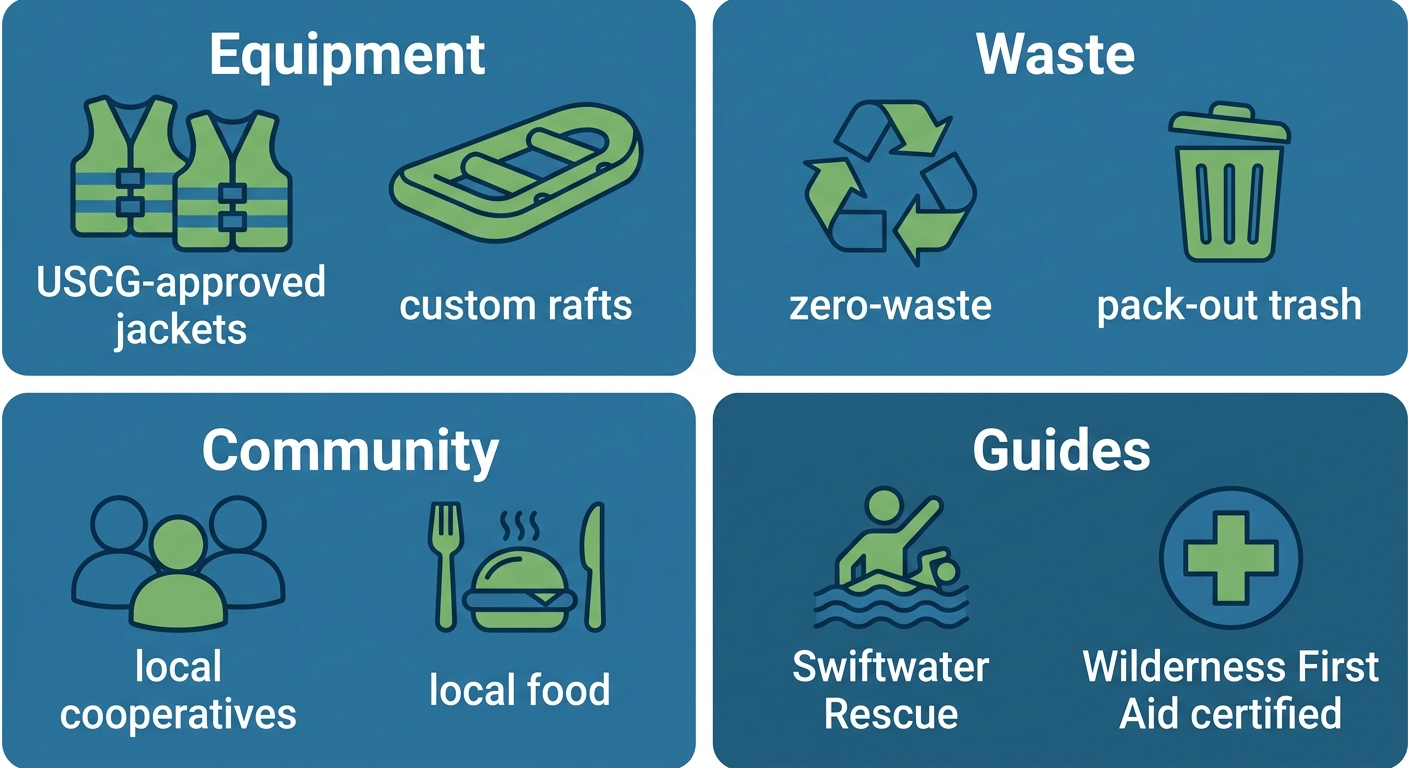 Key factors for selecting eco-friendly river adventures.
Top Eco-Friendly River Sports and Their Conservation Impact
Eco-friendly river sports like rafting, creeking, and kayaking do more than get your heart pumping — they directly fund essential conservation work. Our rafting expeditions on the Río Verde and Río Samana allocate a portion of every booking to river clean-ups and ongoing water quality monitoring. This is regenerative travel in action: your adventure fee pays for trash bags, gloves, and the logistics needed to remove waste from remote canyons.
The colombia adventure tourism market 2026 is projected to grow significantly, which makes it even more critical that operators tie revenue to restoration. When you join a technical creeking trip down Santo Domingo creek or paddle through Class IV rapids, you’re automatically contributing to cleaner streams and healthier ecosystems. Our guides, trained in Swiftwater Rescue and Wilderness First Aid, also serve as citizen scientists who note changes in water clarity, wildlife activity, and bank erosion on every descent. This data is shared with community cooperatives to inform broader watershed management strategies. It’s a hands-on way to ensure your low-impact river adventure creates a lasting positive ripple effect.
Rivers in Antioquia for Authentic Eco-Adventures
Antioquia is the beating heart of Colombia’s eco-adventure scene, offering rivers that blend adrenaline with authentic conservation experiences. Three waterways stand out for their commitment to sustainability and the unique ways they connect visitors to nature.
- Río Verde for multi-day rafting: Our two-day expedition combines Class III-IV rapids with zero-waste campouts on secluded riverbanks. Every meal is prepared with locally sourced ingredients from nearby cooperatives, and we carry out everything we bring in — no trace left behind.
- Río Calderas for technical creeking: This steep, Class IV creek carves through dense jungle corridors teeming with birdlife and howler monkeys. As you navigate its challenging drops, you’re also helping fund wildlife observation programs and trail maintenance efforts led by our community partners.
- Río Samana for kayaking and reforestation: The crown jewel of Antioquia’s whitewater, this Class IV-V river offers multi-day paddling combined with hands-on volunteering. Between rapids, guests can participate in reforestation projects that stabilize riverbanks and expand habitat corridors.
These rivers are gaining popularity as the colombia adventure tourism market 2026 expands, attracting travelers who want more than just a photo op. Each location offers a distinct flavor of responsible river travel, guided by our expert team and grounded in the principles of conservation, community, and pure outdoor excitement. Revive yourself in nature while making a tangible difference — that’s the promise of an authentic Antioquian adventure.
Community Integration and Conservation Festivals
For over 30 years, our roots in Cocorná have shaped everything we do. We believe adventure travel should leave a positive mark, which is why we embrace regenerative travel colombia principles that prioritize people and place alongside unforgettable experiences. By integrating deeply with the local community, we ensure that every guest who joins us contributes to the well-being of the region and its residents.
Investing in People Through Education and Opportunity
Our commitment starts with direct community investment. We run a dedicated raft guide school and youth programs that build paddling competence from beginner to advanced levels, creating career pathways for local residents. According to our internal programs, these initiatives equip community members with professional certifications and outdoor leadership skills. Our Spanish school further bridges cultural gaps, inviting travelers and locals alike to connect through language. These programs represent a tangible contribution to the colombia adventure tourism market 2026, where skilled local guides are in high demand. Great adventure, food, fun and memories are built on a foundation of empowered people.
Celebrating Conservation Through Action
Our dedication to the environment comes alive each year at the Samana Fest, a vibrant conservation festival that we organize. This event combines large-scale river clean-ups with a cultural celebration featuring music, local food, and community workshops. It is a day where we revive yourself in nature and take direct action to protect the Río Samaná watershed. This festival, along with our everyday operations, is supported by our eco-friendly basecamp, which sources food locally and provides direct revenue to Cocorná families.
The following table compares how different adventure tourism models impact local communities, from conservation work to economic benefits.
| Operator Model | Community Programs | Conservation Initiatives | Local Economic Impact |
|---|---|---|---|
| Local Expert Operator (e.g. Freak’n Creek’n) | Guide school, youth programs, Spanish school, local hires | River clean-ups, Samana Fest, eco-friendly basecamp | Direct revenue to Cocorná, local food sourcing |
| Large International Company | Minimal local partnerships, foreign staff primarily | Basic environmental policies, limited restoration | Leakage to foreign economy |
| Small Community Cooperative | Entirely local ownership, reinvests profits | Small-scale, but may lack resources for large impact | High multiplier effect but limited capacity |
This comparison highlights a clear pattern: by the experts at a locally rooted operation, you see the deepest community programs and most active conservation efforts. Large international companies often suffer from significant economic leakage, while small cooperatives, despite their authentic local ownership, face resource constraints that limit the scale of their environmental impact. Our model balances professional capacity with genuine local investment.
This community spirit is a direct example of regenerative tourism in Colombia. We invite you to explore yourself with nature and experience firsthand how adventure can fuel lasting, positive change.
Now that you understand how regenerative travel can transform your adventure, you likely have a few questions. Here are answers to the most common ones we hear at Freak’n Creek’n.
What is regenerative travel and how does it apply to Colombia? Regenerative travel goes beyond sustainability to actively restore ecosystems and uplift local communities. For us, this means practicing regenerative travel colombia through river stewardship in Antioquia—our guides lead clean-up initiatives on the Río Samana and collaborate with local families to protect these watersheds for future generations.
Can I practice regenerative travel while whitewater rafting or kayaking? Absolutely. Explore yourself with nature by choosing sustainable river expeditions that prioritize low-impact access. Our guides are trained in environmental interpretation, we use custom 11-foot rafts to minimize riverbed erosion, and we support community-run lodges and restaurants in Cocorná. Every trip leaves the river better than we found it.
How does Freak’n Creek’n’s 30+ years of experience support regenerative travel? By the experts who know these rivers intimately. Our professionally trained guides, USCG-approved gear, and basecamp operations create Great adventure, food, fun and memories while employing local staff and sourcing ingredients from neighboring farms. Similar regenerative practices are gaining traction in other destinations, such as sustainable adventure tourism in Peru.
What is the outlook for regenerative travel in Colombia’s adventure tourism market in 2026? The colombia adventure tourism market 2026 is increasingly shaped by travelers seeking restorative experiences that Revive yourself in nature. We see growing demand for trips that combine adrenaline with authentic cultural exchanges and measurable conservation impact across Antioquia’s river systems.
Your Path to Regenerative Travel in Colombia
Regenerative travel in Colombia is tourism that actively restores natural habitats and uplifts local communities—beyond sustainability. As the Colombia adventure tourism market 2026 grows, this restorative approach redefines exploration.
Our multi-day sustainable river expeditions, like the Río Verde 2-day rafting trip, actively regenerate both land and community. With 30+ years of eco-adventure expertise, we integrate practices like riverbank cleanups and guide-led conservation talks that invite you to explore yourself with nature.
Revive yourself in nature with great adventure, food, fun and memories. Let us craft a trip that renews both the wild and your soul. Read on to explore our multi-day expeditions.